
Blog

Button 2026 pre-conference party recap

Team Button
September 1, 2026
Team Button
September 1, 2026

Button 2026 speakers explore the future of content design, from AI and ethics to community, career growth, and creating meaningful change.

Event transcript

Torrey Podmajersky: First off, I’d like to welcome Mike Jang to the Button stage. Welcome, Mike.

Mike Jang: Torrey, thanks so much for having me.

Torrey Podmajersky: So great to see you too, Mike. Tell us a little bit about yourself.

Mike Jang: I’m a principal technical writer for a software company called F5. I live in Vancouver, Washington, and this is actually my third career.

Torrey Podmajersky: Well, thank you so much for being here today. And I also want to bring on Angie. Let me introduce you all to Angie King.

Angie King: Hello, everybody. Hi, Torrey.

Torrey Podmajersky: So tell the Button folks a little bit about yourself too, Angie.

Angie King: So I currently live on the Gulf Coast of Florida, working for Mayo Clinic, which is actually a Minnesota-based company because that’s where I’m from, and I am a marketing content strategy manager, but I’ve played all kinds of roles in content over the years, including content designer and UX lead. So I’m very excited to be here to talk to the community.

Torrey Podmajersky: So excited to have you here, Angie. And let’s bring on Ayanfe. Before we get into everything, let’s get our final Button 2026 speaker on the stage, Ayanfe Adewoye.

Ayanfe Adewoye: Hey there, Torrey. So excited to be here.

Torrey Podmajersky: Me too, clearly. So before we get into all things Button, can you tell us a little bit about yourself?

Ayanfe Adewoye: Yes, I would love to. Hi, everyone. My name is Ayanfe. I’m a lead content designer at Hinge, the dating app, and I’m currently located in New York City.

Torrey Podmajersky: Oh, fantastic. So we are a little bit West Coast, a little bit East Coast of the United States here today. We have with us Mike Jang as a keynote speaker, Angie as a watch party speaker, and Ayanfe as one of our panelists. So we have the full spectrum here of what’s going on [at Button]. And I want to start us off with a question about your topics: a casual overview of your topic, especially why you’re excited for it. Mike, you wanna start us off?

Mike Jang: Oh, sure. My topic is Humans in control: design a content-savvy AI agent. I’m going to talk about how I, as a content designer, built an AI agent from our UX style guide. One thing I’ve learned in the past week, Figma is doing the same kind of thing. I’ve designed the agent to provide three options based on my experiences using AI for fantasy football. And with three options, humans stay in control.

Torrey Podmajersky: Nice. Thank you, Mike. Angie, how about you? What’s your topic for your watch party?

Angie King: So if anybody’s following me on LinkedIn, they’ll probably know that it’s about OOUX because I can’t stop talking about it. Ever since I learned about this method and specifically the ORCA framework, I have been like, “Where has this been all my life? Why don’t more content designers practice this? How do we make a movement?” So, this talk is my first attempt at doing just that.

Torrey Podmajersky: Fantastic. And I’m so glad we’re there for the first attempt at it. Ayanfe, tell us about the panel you’ll be speaking with.

Ayanfe Adewoye: Yes, I would love to. So, my panel is Harm reduction in content design: How we live out our values at work. And in a nutshell, it’s all about design ethics and how it manifests in the content design space. And there’s a bunch of reasons why I’m super excited about this one. I think one big reason is that I think we can all agree the past few years have been really strange when it comes to tech and tech culture. You know, contemplating this topic, I’ve realized that the tech optimism a lot of us had in the early 2000s and early 2010s has largely shifted into something a bit more sinister and pessimistic. And I think it’s really crucial for us now to take a collective step back and to think about our role in helping make tech safer and better for people. So that’s all to say, we’re gonna be talking about some real serious stuff in this one, but I’m super excited about it because this is largely gonna be an optimistic talk. So, for me, I’m super excited and optimistic about what the future has in store, and I think the first step in shaping that is just having a collective conversation as a discipline and as workers and as humans all about it.

Torrey Podmajersky: I am so excited for this. I am excited for all of these talks and all of the other talks. Behind the scenes, I got to work on programming with Tenessa Gemelke, who’s also here today. It is marvelous how content design, even in this—and I love how you put that, Ayanfe—this sinister time, we are looking at things very practically and very optimistically, but without trying to shoot ourselves in the foot with being optimistic when there’s not reason for it. But we have reason for it. We hold so many of these threads of power that go out into the universe. So I know that I chose some talks. I mean, I didn’t choose them by myself. There was a board, there was a process. But I looked at some of them going, “Oh, I wanna learn that. I wanna learn that from… Oh my goodness.” So can I have you talk about what you are hoping to learn at the conference? Angie, can I start with you?

Angie King: I am hoping to learn about just kind of where everybody is in... Like you were saying, it’s been this strange sort of weird time, and I feel like we’re in this spot right now, or at least, I’m feeling very optimistic. I see changes happening, and I know that a lot of our speakers are coming to us with their sort of good approaches and good ideas for how to continue this momentum, you know? And sometimes it’s a tactical thing, or sometimes it’s a more philosophical thing, like Ayanfe is going to be discussing. We need all this stuff to do our jobs. We are the connectors within our organizations, a lot of times between the cross-functional teams. So having it be this breadth of topics totally makes sense to me.

Torrey Podmajersky: Yeah. Absolutely. Mike, how about you?

Mike Jang: I’m going to be really focused on Intensive Day, the new day. It’s going to have AI presentations, and yes, this is a worrying time right now. But as they say, the Chinese character for crisis is also the same character for opportunity. It’s our opportunity to take control of the content from the beginning, from where others have taken control before.

Torrey Podmajersky: Yeah, that “content is everything” thing. I think that that crisis and opportunity character has been a little bit abused, but it is a wonderful sense of togetherness right there. Ayanfe, how about you? What are you hoping for?

Ayanfe Adewoye: Oh man, I have so many hopes. I think one big hope I have relates to my talk and just connecting with other content designers and UX folks around the world to hear how they’ve been holding up in this time we’re in, and also how they’re inspiring change in their organizations and the work they’re doing. I’m really excited just to hear what everyone’s been up to in that regard. And when it comes to craft, the content design team at Hinge is on the smaller side, so I’m always thinking about scale and how I can scale every project I’m on. So I’m excited for two talks. One of them is From pattern library to system: Evolving a content design system by Emma Pindera. And the other one is all about localization, and namely, how it’s not just translation and how we can leverage AI to build global UX by Claudia Muller. Every time I scroll through the talk list at Button, I feel like there’s more stuff I’m uncovering and I want to dive into. But, as it relates to what I’m currently focusing on, those two are top right now.

Torrey Podmajersky: Those are pretty amazing ones. I am so looking forward to, like you were calling out… I'm looking forward to all of them. I don’t have a favorite child, and these are not my children. The talk by Lena Shyryna about writing push notifications for the government in Ukraine, in Kyiv at the moment, where push notifications, whether they’re about parking violations or about air raids, and how do you get people to keep reading them, I want that to happen. Can you guys hear my cat yelling at me while I’m talking? Because wow, paws on my arm right now.

Ayanfe Adewoye: He’s just excited for Button. I don’t blame him.

Torrey Podmajersky: He’s so excited for Button. He does not get to come with me to Button. I go to Minneapolis with the rest of the amazing production team that makes it all possible. Everybody else gets to have Button with their pets at home. I very much encourage you to join the #pets-at-Button Slack channel and post your pictures there so that those of us who are away from them can enjoy them. So can I ask ... And Ayanfe, I’d love to start with you. Reflect on how and where you’d like to see this content design community grow, because you already talked a little bit about that for the Hinge content design community.

Ayanfe Adewoye: Yeah. I’ve been thinking a lot about that recently, and one thing that’s been top of mind for me relates to how we can bring in more newcomers in the discipline. I feel like content design, for as long as I’ve been a part of the community, has been one where bringing in new people is tough. A lot of organizations don’t hire that many content designers, so the ones they do bring on board often need to be more skilled and experienced. But obviously for our discipline to really grow and prosper, we need to be thinking of ways we can include more people. So I think this is super pertinent, too, just given what AI is doing to UX and just work in general. How do we bring more content designers into the fold? And, you know, in thinking about this too, I gotta give a big shout-out to the Button team and the equity scholarships that are provided to help folks from marginalized and underrepresented backgrounds join the conversation. So more initiatives like that are just always so well appreciated.

Torrey Podmajersky: Yeah, it is such a joy to be able to sort of swim in the waters of a community where the team works really hard to make sure that the doors are open to people so that whether they're new in their career, whether they would be otherwise excluded, they get to come in the door.

Angie King: You know, I would love to comment on that really quickly just in terms of, I agree about bringing up young people or newer people and creating more entry-level work. Like, there are no entry-level positions out there. It’s ridiculous. But then there’s also the fact that we have all these really experienced content folks who are without work right now too who are getting the opposite thing of, “You’re too experienced,” which is coded for you're too expensive, right? So, we have to make room for everybody.

Torrey Podmajersky: Yeah, and sometimes it’s coded for, “You’re too old,” right? Although, you know, that opens legal doors. Mike, I see you.

Mike Jang: Yeah, I hear that. Between the beginning of 2023 and 16 months later in early 2024, I went through two layoffs at a toxic job. So I feel that. I mean, the first layoff was four days before my 60th birthday. So, I saw people Zoom me in interviews and react to my gray hair. What can you do? I survived, I managed, and now I talk about AI.

Torrey Podmajersky: Yeah, we are growing and changing in all kinds of ways, and what I love is that this ... Okay, this is gonna sound really self-serving because I host this conference, but seriously, y’all, this conference flexes as the design discipline, as the content design discipline is flexing. And even last year with our AI Day, and this year with all these amazing talks coming up—the new ideas, the new ways people are putting things into practice while they are focusing on the fundamentals of serving people with good information using language in interesting ways and effective ways. I mean, man, I just love it. Okay. I want to go a little deeper now, and deeper inspired right from a question that Ayanfe brought up in our preparations for this, because Ayanfe, you’re on this harm reduction panel, and you said, “Hey, Mike, how do you think about encoding ethics-based values in AI agents?” Mike, how do you think about encoding AI ethics-based values in these AI agents?

Mike Jang: It’s rather important and rather pertinent, especially when you have public AI agents. The AI agent I’ve worked on is internal only, so we haven’t needed to encode it. But I’ve learned that Figma is encoding things, other things that I’m working on specifically, guardrails. What happens, in terms of ethics as a general principle, don’t do, quote unquote, “harmful things.” And every month I see people coming out with very specific guardrails. Don’t make a bomb in this way. If you encode it in base 64 format, do you actually get an LLM to answer that question? How do you prevent that? It’s an emerging field, and we’re racing to keep up with all the harm that can be done.

Torrey Podmajersky: Racing to keep up with all the harm that can be done rhymes with my internal feeling of panic about that.

Ayanfe Adewoye: This is something I’ve thought about a lot too. There’s this whole AI efficiency point that I often see parroted, especially on LinkedIn, about the 10X designer. Meaning the designer that’s 10X more efficient and can churn out 10X more output with their work. Which, you know, may sound great on the surface from an efficiency POV, but as I think more about ethics in the design space, I think it’s clearly apparent that within that 10X multiplication factor, is the potential for 10X more harm to be inflicted, especially as LLMs and these other autonomous agents have bias baked in, whether it’s through their data sets or their prompts. So I hear what Mike is saying about thinking more broadly about these things. But it’s just such a big issue and it’s hard to really come up with a concise, zingy one-liner way to solve everything.

Angie King: And about the efficiency thing too, you can’t realize that efficiency if you don’t already have the skills that it takes in the first place, because you’re not gonna be able to call out the AI for its crazy BS. So that’s what I’ve learned. Ever since even learning OOUX, there are tools out there that people have created to do that sort of methodology, and it’s like … they’re great, and they’re helpful, but as a newbie you wouldn’t know what to do because you don’t have the framework underneath. So the education and the framework alignment, all of that stuff, we still need to have as a content community. We can’t just let these executives think that they can hand off our job to anybody. You know, that’s not the case. We still have the knowledge that it takes in order to realize that efficiency.

Torrey Podmajersky: Yeah. And to realize those ethics themselves. Mike, something that you had said is that you’re working on an internal project, so you know, encoding the ethics is not as important, but oh, we’ve seen some companies do some unethical things internally. Maybe you’re not worried about it at your company, and I don’t have any insight into that, but encoding those ethics into the decisions that are being made or the AI influence of the decisions that are getting made, right? Like how these things work, I want to worry about all of those things. Yeah, you were gonna say something?

Mike Jang: Absolutely. Yeah. It’s definitely a corporate decision to encode such ethics. The 10X thing, it can be real if you accept slop. I’ve seen pull requests done by AI which literally have pages of explanations, and all it does is fix a typo. What a waste!

Torrey Podmajersky: A waste on so many levels, so many levels. You know, it reminds me of the idea in writing. Remember writing? Where the constraints make it better and make it easier to start and make it so that you know what is good and what is not. Like writing poetry, writing to a form is harder, and usually you’re eliciting different information and different ideas. I am hopeful that guardrails will help these things.

Angie King: I think absolutely they will. I mean, I’m working on a side project with a company that’s creating their own AI, and they’re developing an empathy engine, it’s called, for this thing. So there are people out there who are really thinking about this. The more of us that get involved, the better it’s gonna be. Imagine if you’re on the ground floor and you can develop something like that. And I think that there’s a huge call out there for this kind of thinking as we continue down this road. It’s not gonna stop, right? We have to just make it the best it can be.

Torrey Podmajersky: Yeah, absolutely. I’m gonna move us to a question from our lovely studio audience here. What is something ... We asked earlier about how do you want the content design discipline to grow? A question from Jonathan: What’s something about the discipline you want to see go away?

Angie King: Titles? Let’s just get rid of them. Just say content. We’re content people. I don’t care. I... just, just land on one.

Torrey Podmajersky: Stop fighting about them, maybe. Yeah, we could have that go away. Yeah, absolutely.

Mike Jang: We’re an important part of the process. And instead, in most, at least in software, most companies, we’re not as respected as your average engineer or product manager.

Torrey Podmajersky: So you’d like to remainder that disrespect?

Mike Jang: Absolutely.

Ayanfe Adewoye: I think for me, and this might be a controversial one. I remember when I first was dipping my toe into the content space, I feel like there were so many conversations about how we can fight to get a seat at the table, and I think that’s very important and it’s something that is lacking in a lot of organizations. However, I did find that particular focus to be sort of constraining and a self-fulfilling prophecy of sorts. But the good news about that, and this is just purely anecdotal. I don’t have any data to back this up, obviously, but what I have noticed is that there has been a broader breadth of conversations relating to craft and ethics like we’re talking about, and other things that are a bit more substantive to me. So that’s to say I don’t think this conversation piece needs to go away entirely, but I like how we’re just thinking more broadly about what we collectively talk about as a discipline.

Torrey Podmajersky: Yeah. Absolutely. I think if I were to answer this, it would be a lot about that seat at the table question. I really appreciated a few years ago when Relly stood on stage and yelled about, “We are the freaking table.” I see this actually across UX; this is not limited to content design. We get caught up in being asked for things and being told that we’re great because we’re delivering lots of artifacts all the time. But you know who delivers artifacts faster? You know what does? AI. But we deliver the right artifacts better, and we know why, and we are responsive to our communities. And it is not just about delivering artifacts. That is the one thing: that delivery of artifact as our token of value is something that I would like to see disappear in favor of the quality of our decisions, the directions we lead, our focus on the user’s needs and the business needs. I’d like to see a ground shift there.

Ayanfe Adewoye: Yeah. I think that’s one positive thing that AI has brought, interestingly enough. I feel like since it’s so easy to craft artifacts nowadays through Claude or ChatGPT, at least for me I’ve noticed a lot more people are skeptical about what’s being delivered and its value. So that tasteful thinking and curation is so important. Big plus one to that.

Torrey Podmajersky: I’m gonna move us to a question from Victoria. I love this question. She says, “We have a few challenges with workflows between content designers.” So I'm building here on like, hey, how is it that we are working with each other? Her question continues, “So with workflows between content designers, product designers, and stakeholders who are on different tools, the version control is real. I would love to learn more about your favorite tools for easy workflows and why.” Fantastic. Mike, lead us off with some: what are your favorite tools and why?

Mike Jang: I’m a believer in Git of all things. I know it strikes fear in a lot of people, but it’s the software way of doing version control. If you understand Git, you can always go back to a preexisting working configuration.

Torrey Podmajersky: 100%. Angie?

Angie King: I haven’t found a favorite one, Torrey. I’ve used so many different things. And right now we’re in the transition of moving from one system to another, and one team uses one and another team uses another, exactly like this question said. And we’re really trying to just string things together with overcommunication basically. Until everybody gets on the same system.

Torrey Podmajersky: Yeah. This question made me immediately think of all of the systems I’ve been through at different companies on different teams, and the source of truth and then the other source of truth, and then the real source of truth.

Angie King: This is the source of truth for content. This is a source of truth for design. This is a source of truth for engineers. Like what?

Torrey Podmajersky: Yeah. See, Angie. If I were to follow my instinct to flip you off for that, it would be flipping off what you were bringing up, not you specifically. Ayanfe, how about you? Do you have favorite tools?

Ayanfe Adewoye: To Mike’s point, I think anything that enables people to work in real time is best. Something I’ve noticed in other organizations I’ve worked at is when it comes to version control, if people are using PDFs, for example, for style guides, that quickly just gets unwieldy in terms of determining what’s current and what isn’t. So anything that enables folks to collaborate in real time and can be updated, whether it’s Google Docs or Notion or anything like that, works best.

Torrey Podmajersky: Yeah, updated and reliable in real time.

Mike Jang: Pushing that notion a bit further, one thing I was able to do was make the content design guide the single source of truth for our AI agents. That’s a way that we keep ourselves in control when there are changes to the content design guide; that automatically changes the AI agent.

Torrey Podmajersky: Having the AI in terms of automating dense ideas is a compelling use case right there. Any last thoughts on tools? Do you wanna make sure people use this one good tool? I'm trying for you, Victoria. Okay. So a question from Peggy, building off of what Mike said about using the AI agent: what’s the biggest problem you see with AI-generated text aside from accuracy?

Ayanfe Adewoye: A big problem I see is less about the text and more so about the eradication of thinking when it comes to writing. At least for me, I’ve always seen writing as an excellent exercise in helping hone what I actually think and suspect about a particular topic. And I think by having folks rely on AI-generated text, it just cuts out so much of that process and risks resulting in slop that is bountiful but ultimately doesn’t communicate that much. I’ll speak from a place of vulnerability. When LLMs were first being popularized, there was a moment in a meeting where I brought some AI-generated text to a stakeholder review, and I got some questions on what particular parts were actually saying, and I was caught flat-footed, where I was like, “Wait, what is that actually saying?” So it was a big learning moment for me about the importance of actually making sure that you lead with your own thoughts and not just rely on AI to do it all for you.

Torrey Podmajersky: So critical. Angie, how about you?

Angie King: I mean, little things annoy me still. I love em dashes. Em dashes are fine. Don’t get on AI about that. But the thing that drives me crazy is repetition of certain phrases, sort of like bridging one topic to another without an actual connection. What do you call it? Non sequiturs, I guess. Things of that nature. I always am like, “This is a great start. Now let me fix it.”

Torrey Podmajersky: Yeah. Mike, how about you, aside from the inaccuracy?

Mike Jang: Well, it emphasizes the importance of subject matter expertise. You need to know when to call BS on AI. You talk about 10 times productivity, and yes, that can happen if you can accept slop. I don’t accept the slop. I go through it line by line, and yes, it’s helped me, but I accept only a two times productivity increase, and that’s okay.

Torrey Podmajersky: I’m sure that other speakers at Button would have also brought up what about all of the sustainability issues with it…whether it’s environmental sustainability, energy sustainability, or even the sustainability of the LLMs eating their own content and driving ever toward some acceptable mediocrity, which is different than inaccuracy.

Angie King: Oh, 100%.

Torrey Podmajersky: Ayanfe, you looked like you wanted to say something there.

Ayanfe Adewoye: Yeah, this is somewhat related to the question, but just a question for Mike and Angie: Have you found that AI-generated text has affected your own writing style or the way you like to write? Because I found that I’ve started to avoid using em dashes. There are certain pattern structures I’ve just avoided entirely just to communicate to other people that whatever is written isn’t AI-generated. It’s just kind of annoying because, obviously, LLMs have learned from humans on these patterns, and it’s contradictory to avoid writing that way, but I’m just curious how it’s affected you and your own writing style.

Angie King: I don’t think it’s affected my own writing style per se, but it’s made my writing process different. The way in which I’m finding it useful is I get to analyze the kind of methodology that I wanna teach it. Like, okay, actually, this phrase doesn’t work because of that. And so it’s kind of like reviving my own knowledge as I’m trying to get the AI to go along, which is really a fun, interesting way to keep your own skills sharp.

Torrey Podmajersky: Talking it into doing the thing that you actually want. Yeah. Mike, how about you?

Mike Jang: Slight tangent for you. I’ve seen a lot of complaints from people for whom English is a second language. Their writing styles get confused for AI. But you’ve got to be able to respect that. I mean, myself, my own personal writing style, I do write documentation. I’d write it all like content designers if I could.

Torrey Podmajersky: Yeah, because we’re awesome. That’s what that is right there. I would love to go … let me go aside from AI for a minute, right? AI is the discourse that our entire... It’s not our discipline; it’s much larger. It’s a global conversation right now. Katie asked the question, “Who in the content design world is inspiring you right now?” Who’s your content design hero that you’re going, “Yeah, they said a good thing”? And it doesn’t have to be a content designer, because we get inspiration from anyone. Who’s making you a better content designer right now?

Angie King: I’m gonna have to plug Sophia Prater, who teaches the OOUX certification that I took. And, you know, there’s a bunch of folks within her kind of orbit that talk about OOUX that I follow on LinkedIn. But I also really enjoy Pavel Samsonov’s email. If you guys don’t get The Product Picnic, sign up for that immediately. It’s so good. I mean, if you’re not already on Torrey’s email list, you better get on that as well. Get that every time she sends it.

Torrey Podmajersky: Thanks, Angie. Mike, go ahead.

Mike Jang: I go back to my old hero, Steve Krug, Don’t Make Me Think. He’s actually writing another edition. I think he’s in his late 70s right now. He’s still at it.

Torrey Podmajersky: He is still at it. And I saw an interview with him pretty recently. I did not realize Steve Krug came from technical writing, and then his landmark book, Don’t Make Me Think, strongly influenced an awful lot of the UX we see around the world. And in the recent interview, my takeaway was him going, “Not like that.” Right? Because people still should be encouraged to use their own volition, and we’ve taken away a lot of volition, a lot of willpower with how we’ve designed things. Man, we’re getting a stellar list. Ayanfe, who would you add to the list?

Ayanfe Adewoye: A content designer who I’ve been following is Adedayo Agarau. He’s a content designer at PayPal, I believe, and a lot of his Substack posts are highly technical in terms of explaining how to set up different layers of infrastructure and context in order to make a well-informed LLM system. I have been really appreciating his posts. But, going back to the topic of ethics and learning about the impact of AI, something I really enjoy is reading different social sciences books that talk about the intersection of society and technology to learn what impacts popularized technologies have on certain audiences. So one book I really enjoy that I’m reading through right now is Race After Technology by Ruha Benjamin. It goes in depth about the intersection of race and technology and how technologies like AI perpetuate harm on a big scale. So I feel like just learning from folks who are most affected really sharpens my empathy building and the way I think about solutioning.

Torrey Podmajersky: Thank you for that. Thank you. Ayanfe, say the Substack you mentioned; say their name again?

Ayanfe Adewoye: Yes. I can throw it in the chat, too: Adedayo Agarau.

Torrey Podmajersky: Thank you very much. Okay. I also want to ask, what advice would you give somebody attending Button for the first time? Angie, I know you have been a longtime participant and volunteer at Button.

Angie King: Yeah. Of course. I was gonna plug Slack because I have fun helping moderate that on the back end, or have for the last several years, and I'm back for that this year. The community is one of the best things about Button, and getting in on the Slack and finding your niche little channels and geeking out with everybody is really such a pleasure. But also feel free to ban yourself from Slack if you want to actually watch a talk, you know? Because sometimes you can get very distracted by the chatting going on, and that's fine too 'cause you can go back and watch the talk later. But maybe you wanna focus on the talk as you’re watching it, so it’s up to you. I would just say you have to sort of make your own rules about what you’re prioritizing. Some people prioritize the community and the connection, and that’s totally cool, and then they go to the talks later because they get the recordings. Or you can sort of do it vice versa or a little bit of both. You can make it your own.

Torrey Podmajersky: Yeah. Absolutely. I’ve heard from people … I was very sad when I heard from somebody, a couple years ago, before I was involved with the Button production. I heard that somebody spends so much time in Slack at work, and they hate Slack because of work, and so they didn’t even get into the Button Slack. And I’m like, “Oh, but it is different.” Like, the mechanics are the same, but it is so different. Good news: They tried the Button Slack and said, “Oh, I didn’t know that Slack could be like this.” It is like being in a noisy room with your new best buds. It is weird to say that in this post-pandemic year, to say that there is a Slack that is intrinsically enjoyable. It is honestly … the worst part of hosting is that I can’t spend much time there at the best times because I’m on-screen. But it is kind of awesome. Mike, Ayanfe, anything you want to add there?

Mike Jang: Sure. Full confession, this will be my first Button, but I’ve been told that I can dedicate all three days to Button. I put work away. I focus on Button. The second thing: if you’re doing the Intensive Day, check out the prerequisites. Make sure you have things installed. An AI tool, Figma, Markdown editor, and a Chatbase account, of all things. But having those ready will prepare you for the talks.

Torrey Podmajersky: Absolutely. Thanks for that reminder too. Ayanfe, how about you?

Ayanfe Adewoye: Big plus one to everything Angie and Mike have shared. I think my tip would be don’t be afraid to be social and reach out to folks that you’re curious about or want to hear more from. I’ve been going to content conferences for the past 10-ish years now, and they’ve always struck me as a family reunion of sorts, just seeing all sorts of familiar faces. And a lot of the familiar faces are people that I just met up for coffee or just a virtual chat and got to learn from more. So send a LinkedIn request. Send them a DM. Schedule some time. They won’t bite, I promise. Just such a good time.

Torrey Podmajersky: Yeah. It is, it is. I remember being shy at my first content conference, which was Confab, and also going like, “What is even going on here with all these people being so enthusiastic at each other? Like, is this even real? What is going on here?” And Button takes that energy maybe even a step further, and it was intimidating to me. And yet it is... I found that it is trustworthy, and that is kind of a high bar, especially for content designers who maybe have been in the industry for a while and are used to being the solo tough person. We can be good to each other, and we are. I’m gonna go to our last question. What do you hope for somebody, whether they’re there for the first time or it is their... how many Buttons are we now? I don’t even know. Or if it’s their, merely their most recent Button, what do you hope they take away from it?

Angie King: Yeah. I’m just gonna say I hope people leave feeling optimistic and inspired to do good work. I know that it can be a grind to be in our field. It has been; I think it always will be. But whenever we get together, it’s so inspiring, and it just reminds me of why I went into this work. Really, the power of content is so incredible, and the power of the people behind the content is the thing that matters, and that’s what this conference does. So I hope people just leave feeling really inspired and that there’s such a support network out there for you, even if you’re a solo content person on your team.

Mike Jang: I’d like people to come out of this with a roadmap. Typically, with conferences and I’ve heard Button does this too, there are so many things that you could do. You get so many ideas. Pick one or two ideas, understand the roadmap for how you can implement things, and then put it into action in your job.

Ayanfe Adewoye: My answer is kind of a meld of Angie’s and Mike’s. Thinking about design ethics and harm reduction, I really hope folks feel empowered and inspired to drive positive change in their organizations and their community as well. Something I’ve been thinking a lot about is how, as designers, we are effectively gatekeepers for the work that goes out there and affects people. So I really want folks to feel empowered to flex their voice and to advocate for users and folks who are marginalized, for whatever they’re working on.

Torrey Podmajersky: Amazing. I hope all these things. I hope all these things and just a sense of togetherness. Like, we’re all in this together. We’re all in this content design world together, but we’re also in this discipline and in these industries together, and we are making forward progress through some major headwinds that we don’t have to ignore, and we don’t have to talk over. Okay. Y’all, thank you. Are you super excited? Cause I’m super excited. I want to say goodbye to our amazing Button speakers for this moment, knowing that I get to talk to all of you in four short weeks. So Mike, your keynote, Humans in control: Design a content-savvy AI agent. Thank you so much. Then Angie, your watch party, Object-oriented UX: A content-first approach to meaningful content design. Can’t wait for that.

Angie King: Thanks. See you there.

Torrey Podmajersky: See you there. And Ayanfe, the panel you’re on, Harm reduction in content design: How we live out our values at work. I mean, clearly that’s on my mind lately. Can’t wait for that.

Ayanfe Adewoye: Yeah. Thanks a ton, Torrey. See you all at Button.

Torrey Podmajersky: Awesome. As we wrap up, I just want to do another special thank you to our Button 2026 board, Jonathan McFadden, Keri Maijala, and Andrew Stein. These people helped shape an amazing program this year, and I can’t wait to share it with you. We all can’t wait to share it with you.

Subscribe to the Button newsletter!

Get more valuable content design articles like this one delivered right to your inbox.

Thanks! Check your inbox to confirm your subscription.
Oops! Something went wrong while submitting the form.

About the speakers 

Ayanfe Adewoye is a content designer at Hinge, where he shapes the language behind how millions of people date and make meaningful connections. He’s worked on safety and protection features at some of tech’s biggest platforms — including Twitter’s health and safety team — and at TikTok, where he helped shape early generative AI features and led cross-functional work on AI safety. When he’s not designing, he’s cycling around New York, getting lost in a fantasy novel, and volunteering with elementary students learning to read and fall in love with storytelling.

Mike Jang is a Principal Technical Writer at F5. He crafts software documentation. His current work focuses on AI Security and NGINX. He focuses on developer and UX content. In 2014, he ran into a wall of text in a UI. It was so bad it reminded him of the Blue Screen of Death. He’s worked on content design ever since. Mike has written books for the Red Hat Certified Engineer (RHCE) exam. He is also the author of Linux Annoyances for Geeks. He has pushed for better content design decisions with engineers and architects. He created an AI agent built from his team’s approach to content design. His work focuses on using AI to support content decisions while keeping humans in control.

Angie King is a content strategy leader and Certified OOUX Strategist who believes great digital experiences start with clear thinking and even clearer language. She currently serves as Content Strategy Manager at Mayo Clinic, where she leads enterprise content strategies designed to improve patient experience and drive meaningful outcomes. Prior to Mayo, Angie spent over five years at U.S. Bank, growing from content designer to Vice President of UX Design. Along the way, she scaled a content community of practice from 20 to nearly 200 members and helped shape product experiences that significantly increased digital adoption. Before moving in-house, Angie ran her own content strategy consultancy, partnering with organizations like 3M, Boston Scientific, and Optum. She’s passionate about content-led UX, plain language, and helping teams create clarity out of complexity — because even the most beautiful interface falls apart if the meaning underneath it isn’t solid.

Torrey Podmajersky specializes in UX content for global organizations, having previously worked at Xbox, Windows, Google, and Offerup. She authored Strategic Writing for UX (O’Reilly Media, 2019), and she coauthored UX Skills for Business Strategy: Articulating Impact for Product, User, and Business Outcomes (O’Reilly Media, 2026). She mentors, teaches, and speaks about UX content. In her free time, she enjoys kayaking, art, and spending time with her husband and cats at their Puget Sound home.

Share this post

Join us for Button 2026

Tickets are on sale now! Our virtual conference returns this September with practical talks, live Q&As, and a community that feels like home. Spend two (or three!) days exploring inspiring content design sessions grounded in real-world work and challenges.

Author

Illustrator

Sean Tubridy is Creative Director and Co-Owner at Button Events.

Find out how you can write for the Button blog.

Button 2026 pre-conference party recap

Team Button
September 1, 2026
Button 2026 speakers explore the future of content design, from AI and ethics to community, career growth, and creating meaningful change.

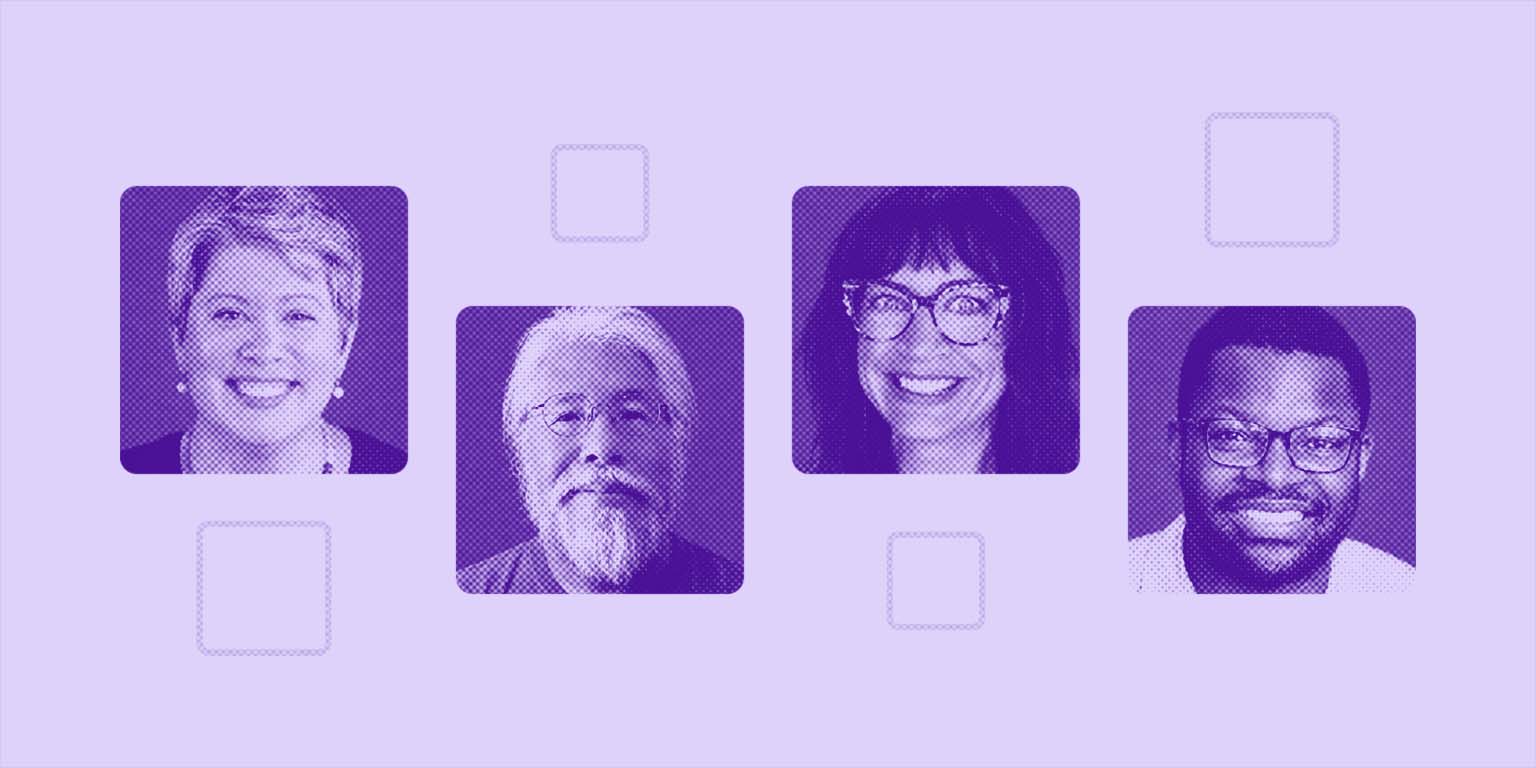
Speakers Mike Jang, Angie King, and Ayanfe Adewoye joined host Torrey Podmajersky for a conversation on what they’re most looking forward to learning at Button and where they see the future of the field headed.

Watch the event recording or read the full transcript.

Event transcript

Torrey Podmajersky: First off, I’d like to welcome Mike Jang to the Button stage. Welcome, Mike.

Mike Jang: Torrey, thanks so much for having me.

Torrey Podmajersky: So great to see you too, Mike. Tell us a little bit about yourself.

Mike Jang: I’m a principal technical writer for a software company called F5. I live in Vancouver, Washington, and this is actually my third career.

Torrey Podmajersky: Well, thank you so much for being here today. And I also want to bring on Angie. Let me introduce you all to Angie King.

Angie King: Hello, everybody. Hi, Torrey.

Torrey Podmajersky: So tell the Button folks a little bit about yourself too, Angie.

Angie King: So I currently live on the Gulf Coast of Florida, working for Mayo Clinic, which is actually a Minnesota-based company because that’s where I’m from, and I am a marketing content strategy manager, but I’ve played all kinds of roles in content over the years, including content designer and UX lead. So I’m very excited to be here to talk to the community.

Torrey Podmajersky: So excited to have you here, Angie. And let’s bring on Ayanfe. Before we get into everything, let’s get our final Button 2026 speaker on the stage, Ayanfe Adewoye.

Ayanfe Adewoye: Hey there, Torrey. So excited to be here.

Torrey Podmajersky: Me too, clearly. So before we get into all things Button, can you tell us a little bit about yourself?

Ayanfe Adewoye: Yes, I would love to. Hi, everyone. My name is Ayanfe. I’m a lead content designer at Hinge, the dating app, and I’m currently located in New York City.

Torrey Podmajersky: Oh, fantastic. So we are a little bit West Coast, a little bit East Coast of the United States here today. We have with us Mike Jang as a keynote speaker, Angie as a watch party speaker, and Ayanfe as one of our panelists. So we have the full spectrum here of what’s going on [at Button]. And I want to start us off with a question about your topics: a casual overview of your topic, especially why you’re excited for it. Mike, you wanna start us off?

Mike Jang: Oh, sure. My topic is Humans in control: design a content-savvy AI agent. I’m going to talk about how I, as a content designer, built an AI agent from our UX style guide. One thing I’ve learned in the past week, Figma is doing the same kind of thing. I’ve designed the agent to provide three options based on my experiences using AI for fantasy football. And with three options, humans stay in control.

Torrey Podmajersky: Nice. Thank you, Mike. Angie, how about you? What’s your topic for your watch party?

Angie King: So if anybody’s following me on LinkedIn, they’ll probably know that it’s about OOUX because I can’t stop talking about it. Ever since I learned about this method and specifically the ORCA framework, I have been like, “Where has this been all my life? Why don’t more content designers practice this? How do we make a movement?” So, this talk is my first attempt at doing just that.

Torrey Podmajersky: Fantastic. And I’m so glad we’re there for the first attempt at it. Ayanfe, tell us about the panel you’ll be speaking with.

Ayanfe Adewoye: Yes, I would love to. So, my panel is Harm reduction in content design: How we live out our values at work. And in a nutshell, it’s all about design ethics and how it manifests in the content design space. And there’s a bunch of reasons why I’m super excited about this one. I think one big reason is that I think we can all agree the past few years have been really strange when it comes to tech and tech culture. You know, contemplating this topic, I’ve realized that the tech optimism a lot of us had in the early 2000s and early 2010s has largely shifted into something a bit more sinister and pessimistic. And I think it’s really crucial for us now to take a collective step back and to think about our role in helping make tech safer and better for people. So that’s all to say, we’re gonna be talking about some real serious stuff in this one, but I’m super excited about it because this is largely gonna be an optimistic talk. So, for me, I’m super excited and optimistic about what the future has in store, and I think the first step in shaping that is just having a collective conversation as a discipline and as workers and as humans all about it.

Torrey Podmajersky: I am so excited for this. I am excited for all of these talks and all of the other talks. Behind the scenes, I got to work on programming with Tenessa Gemelke, who’s also here today. It is marvelous how content design, even in this—and I love how you put that, Ayanfe—this sinister time, we are looking at things very practically and very optimistically, but without trying to shoot ourselves in the foot with being optimistic when there’s not reason for it. But we have reason for it. We hold so many of these threads of power that go out into the universe. So I know that I chose some talks. I mean, I didn’t choose them by myself. There was a board, there was a process. But I looked at some of them going, “Oh, I wanna learn that. I wanna learn that from… Oh my goodness.” So can I have you talk about what you are hoping to learn at the conference? Angie, can I start with you?

Angie King: I am hoping to learn about just kind of where everybody is in... Like you were saying, it’s been this strange sort of weird time, and I feel like we’re in this spot right now, or at least, I’m feeling very optimistic. I see changes happening, and I know that a lot of our speakers are coming to us with their sort of good approaches and good ideas for how to continue this momentum, you know? And sometimes it’s a tactical thing, or sometimes it’s a more philosophical thing, like Ayanfe is going to be discussing. We need all this stuff to do our jobs. We are the connectors within our organizations, a lot of times between the cross-functional teams. So having it be this breadth of topics totally makes sense to me.

Torrey Podmajersky: Yeah. Absolutely. Mike, how about you?

Mike Jang: I’m going to be really focused on Intensive Day, the new day. It’s going to have AI presentations, and yes, this is a worrying time right now. But as they say, the Chinese character for crisis is also the same character for opportunity. It’s our opportunity to take control of the content from the beginning, from where others have taken control before.

Torrey Podmajersky: Yeah, that “content is everything” thing. I think that that crisis and opportunity character has been a little bit abused, but it is a wonderful sense of togetherness right there. Ayanfe, how about you? What are you hoping for?

Ayanfe Adewoye: Oh man, I have so many hopes. I think one big hope I have relates to my talk and just connecting with other content designers and UX folks around the world to hear how they’ve been holding up in this time we’re in, and also how they’re inspiring change in their organizations and the work they’re doing. I’m really excited just to hear what everyone’s been up to in that regard. And when it comes to craft, the content design team at Hinge is on the smaller side, so I’m always thinking about scale and how I can scale every project I’m on. So I’m excited for two talks. One of them is From pattern library to system: Evolving a content design system by Emma Pindera. And the other one is all about localization, and namely, how it’s not just translation and how we can leverage AI to build global UX by Claudia Muller. Every time I scroll through the talk list at Button, I feel like there’s more stuff I’m uncovering and I want to dive into. But, as it relates to what I’m currently focusing on, those two are top right now.

Torrey Podmajersky: Those are pretty amazing ones. I am so looking forward to, like you were calling out… I'm looking forward to all of them. I don’t have a favorite child, and these are not my children. The talk by Lena Shyryna about writing push notifications for the government in Ukraine, in Kyiv at the moment, where push notifications, whether they’re about parking violations or about air raids, and how do you get people to keep reading them, I want that to happen. Can you guys hear my cat yelling at me while I’m talking? Because wow, paws on my arm right now.

Ayanfe Adewoye: He’s just excited for Button. I don’t blame him.

Torrey Podmajersky: He’s so excited for Button. He does not get to come with me to Button. I go to Minneapolis with the rest of the amazing production team that makes it all possible. Everybody else gets to have Button with their pets at home. I very much encourage you to join the #pets-at-Button Slack channel and post your pictures there so that those of us who are away from them can enjoy them. So can I ask ... And Ayanfe, I’d love to start with you. Reflect on how and where you’d like to see this content design community grow, because you already talked a little bit about that for the Hinge content design community.

Ayanfe Adewoye: Yeah. I’ve been thinking a lot about that recently, and one thing that’s been top of mind for me relates to how we can bring in more newcomers in the discipline. I feel like content design, for as long as I’ve been a part of the community, has been one where bringing in new people is tough. A lot of organizations don’t hire that many content designers, so the ones they do bring on board often need to be more skilled and experienced. But obviously for our discipline to really grow and prosper, we need to be thinking of ways we can include more people. So I think this is super pertinent, too, just given what AI is doing to UX and just work in general. How do we bring more content designers into the fold? And, you know, in thinking about this too, I gotta give a big shout-out to the Button team and the equity scholarships that are provided to help folks from marginalized and underrepresented backgrounds join the conversation. So more initiatives like that are just always so well appreciated.

Torrey Podmajersky: Yeah, it is such a joy to be able to sort of swim in the waters of a community where the team works really hard to make sure that the doors are open to people so that whether they're new in their career, whether they would be otherwise excluded, they get to come in the door.

Angie King: You know, I would love to comment on that really quickly just in terms of, I agree about bringing up young people or newer people and creating more entry-level work. Like, there are no entry-level positions out there. It’s ridiculous. But then there’s also the fact that we have all these really experienced content folks who are without work right now too who are getting the opposite thing of, “You’re too experienced,” which is coded for you're too expensive, right? So, we have to make room for everybody.

Torrey Podmajersky: Yeah, and sometimes it’s coded for, “You’re too old,” right? Although, you know, that opens legal doors. Mike, I see you.

Mike Jang: Yeah, I hear that. Between the beginning of 2023 and 16 months later in early 2024, I went through two layoffs at a toxic job. So I feel that. I mean, the first layoff was four days before my 60th birthday. So, I saw people Zoom me in interviews and react to my gray hair. What can you do? I survived, I managed, and now I talk about AI.

Torrey Podmajersky: Yeah, we are growing and changing in all kinds of ways, and what I love is that this ... Okay, this is gonna sound really self-serving because I host this conference, but seriously, y’all, this conference flexes as the design discipline, as the content design discipline is flexing. And even last year with our AI Day, and this year with all these amazing talks coming up—the new ideas, the new ways people are putting things into practice while they are focusing on the fundamentals of serving people with good information using language in interesting ways and effective ways. I mean, man, I just love it. Okay. I want to go a little deeper now, and deeper inspired right from a question that Ayanfe brought up in our preparations for this, because Ayanfe, you’re on this harm reduction panel, and you said, “Hey, Mike, how do you think about encoding ethics-based values in AI agents?” Mike, how do you think about encoding AI ethics-based values in these AI agents?

Mike Jang: It’s rather important and rather pertinent, especially when you have public AI agents. The AI agent I’ve worked on is internal only, so we haven’t needed to encode it. But I’ve learned that Figma is encoding things, other things that I’m working on specifically, guardrails. What happens, in terms of ethics as a general principle, don’t do, quote unquote, “harmful things.” And every month I see people coming out with very specific guardrails. Don’t make a bomb in this way. If you encode it in base 64 format, do you actually get an LLM to answer that question? How do you prevent that? It’s an emerging field, and we’re racing to keep up with all the harm that can be done.

Torrey Podmajersky: Racing to keep up with all the harm that can be done rhymes with my internal feeling of panic about that.

Ayanfe Adewoye: This is something I’ve thought about a lot too. There’s this whole AI efficiency point that I often see parroted, especially on LinkedIn, about the 10X designer. Meaning the designer that’s 10X more efficient and can churn out 10X more output with their work. Which, you know, may sound great on the surface from an efficiency POV, but as I think more about ethics in the design space, I think it’s clearly apparent that within that 10X multiplication factor, is the potential for 10X more harm to be inflicted, especially as LLMs and these other autonomous agents have bias baked in, whether it’s through their data sets or their prompts. So I hear what Mike is saying about thinking more broadly about these things. But it’s just such a big issue and it’s hard to really come up with a concise, zingy one-liner way to solve everything.

Angie King: And about the efficiency thing too, you can’t realize that efficiency if you don’t already have the skills that it takes in the first place, because you’re not gonna be able to call out the AI for its crazy BS. So that’s what I’ve learned. Ever since even learning OOUX, there are tools out there that people have created to do that sort of methodology, and it’s like … they’re great, and they’re helpful, but as a newbie you wouldn’t know what to do because you don’t have the framework underneath. So the education and the framework alignment, all of that stuff, we still need to have as a content community. We can’t just let these executives think that they can hand off our job to anybody. You know, that’s not the case. We still have the knowledge that it takes in order to realize that efficiency.

Torrey Podmajersky: Yeah. And to realize those ethics themselves. Mike, something that you had said is that you’re working on an internal project, so you know, encoding the ethics is not as important, but oh, we’ve seen some companies do some unethical things internally. Maybe you’re not worried about it at your company, and I don’t have any insight into that, but encoding those ethics into the decisions that are being made or the AI influence of the decisions that are getting made, right? Like how these things work, I want to worry about all of those things. Yeah, you were gonna say something?

Mike Jang: Absolutely. Yeah. It’s definitely a corporate decision to encode such ethics. The 10X thing, it can be real if you accept slop. I’ve seen pull requests done by AI which literally have pages of explanations, and all it does is fix a typo. What a waste!

Torrey Podmajersky: A waste on so many levels, so many levels. You know, it reminds me of the idea in writing. Remember writing? Where the constraints make it better and make it easier to start and make it so that you know what is good and what is not. Like writing poetry, writing to a form is harder, and usually you’re eliciting different information and different ideas. I am hopeful that guardrails will help these things.

Angie King: I think absolutely they will. I mean, I’m working on a side project with a company that’s creating their own AI, and they’re developing an empathy engine, it’s called, for this thing. So there are people out there who are really thinking about this. The more of us that get involved, the better it’s gonna be. Imagine if you’re on the ground floor and you can develop something like that. And I think that there’s a huge call out there for this kind of thinking as we continue down this road. It’s not gonna stop, right? We have to just make it the best it can be.

Torrey Podmajersky: Yeah, absolutely. I’m gonna move us to a question from our lovely studio audience here. What is something ... We asked earlier about how do you want the content design discipline to grow? A question from Jonathan: What’s something about the discipline you want to see go away?

Angie King: Titles? Let’s just get rid of them. Just say content. We’re content people. I don’t care. I... just, just land on one.

Torrey Podmajersky: Stop fighting about them, maybe. Yeah, we could have that go away. Yeah, absolutely.

Mike Jang: We’re an important part of the process. And instead, in most, at least in software, most companies, we’re not as respected as your average engineer or product manager.

Torrey Podmajersky: So you’d like to remainder that disrespect?

Mike Jang: Absolutely.

Ayanfe Adewoye: I think for me, and this might be a controversial one. I remember when I first was dipping my toe into the content space, I feel like there were so many conversations about how we can fight to get a seat at the table, and I think that’s very important and it’s something that is lacking in a lot of organizations. However, I did find that particular focus to be sort of constraining and a self-fulfilling prophecy of sorts. But the good news about that, and this is just purely anecdotal. I don’t have any data to back this up, obviously, but what I have noticed is that there has been a broader breadth of conversations relating to craft and ethics like we’re talking about, and other things that are a bit more substantive to me. So that’s to say I don’t think this conversation piece needs to go away entirely, but I like how we’re just thinking more broadly about what we collectively talk about as a discipline.

Torrey Podmajersky: Yeah. Absolutely. I think if I were to answer this, it would be a lot about that seat at the table question. I really appreciated a few years ago when Relly stood on stage and yelled about, “We are the freaking table.” I see this actually across UX; this is not limited to content design. We get caught up in being asked for things and being told that we’re great because we’re delivering lots of artifacts all the time. But you know who delivers artifacts faster? You know what does? AI. But we deliver the right artifacts better, and we know why, and we are responsive to our communities. And it is not just about delivering artifacts. That is the one thing: that delivery of artifact as our token of value is something that I would like to see disappear in favor of the quality of our decisions, the directions we lead, our focus on the user’s needs and the business needs. I’d like to see a ground shift there.

Ayanfe Adewoye: Yeah. I think that’s one positive thing that AI has brought, interestingly enough. I feel like since it’s so easy to craft artifacts nowadays through Claude or ChatGPT, at least for me I’ve noticed a lot more people are skeptical about what’s being delivered and its value. So that tasteful thinking and curation is so important. Big plus one to that.

Torrey Podmajersky: I’m gonna move us to a question from Victoria. I love this question. She says, “We have a few challenges with workflows between content designers.” So I'm building here on like, hey, how is it that we are working with each other? Her question continues, “So with workflows between content designers, product designers, and stakeholders who are on different tools, the version control is real. I would love to learn more about your favorite tools for easy workflows and why.” Fantastic. Mike, lead us off with some: what are your favorite tools and why?

Mike Jang: I’m a believer in Git of all things. I know it strikes fear in a lot of people, but it’s the software way of doing version control. If you understand Git, you can always go back to a preexisting working configuration.

Torrey Podmajersky: 100%. Angie?

Angie King: I haven’t found a favorite one, Torrey. I’ve used so many different things. And right now we’re in the transition of moving from one system to another, and one team uses one and another team uses another, exactly like this question said. And we’re really trying to just string things together with overcommunication basically. Until everybody gets on the same system.

Torrey Podmajersky: Yeah. This question made me immediately think of all of the systems I’ve been through at different companies on different teams, and the source of truth and then the other source of truth, and then the real source of truth.

Angie King: This is the source of truth for content. This is a source of truth for design. This is a source of truth for engineers. Like what?

Torrey Podmajersky: Yeah. See, Angie. If I were to follow my instinct to flip you off for that, it would be flipping off what you were bringing up, not you specifically. Ayanfe, how about you? Do you have favorite tools?

Ayanfe Adewoye: To Mike’s point, I think anything that enables people to work in real time is best. Something I’ve noticed in other organizations I’ve worked at is when it comes to version control, if people are using PDFs, for example, for style guides, that quickly just gets unwieldy in terms of determining what’s current and what isn’t. So anything that enables folks to collaborate in real time and can be updated, whether it’s Google Docs or Notion or anything like that, works best.

Torrey Podmajersky: Yeah, updated and reliable in real time.

Mike Jang: Pushing that notion a bit further, one thing I was able to do was make the content design guide the single source of truth for our AI agents. That’s a way that we keep ourselves in control when there are changes to the content design guide; that automatically changes the AI agent.

Torrey Podmajersky: Having the AI in terms of automating dense ideas is a compelling use case right there. Any last thoughts on tools? Do you wanna make sure people use this one good tool? I'm trying for you, Victoria. Okay. So a question from Peggy, building off of what Mike said about using the AI agent: what’s the biggest problem you see with AI-generated text aside from accuracy?

Ayanfe Adewoye: A big problem I see is less about the text and more so about the eradication of thinking when it comes to writing. At least for me, I’ve always seen writing as an excellent exercise in helping hone what I actually think and suspect about a particular topic. And I think by having folks rely on AI-generated text, it just cuts out so much of that process and risks resulting in slop that is bountiful but ultimately doesn’t communicate that much. I’ll speak from a place of vulnerability. When LLMs were first being popularized, there was a moment in a meeting where I brought some AI-generated text to a stakeholder review, and I got some questions on what particular parts were actually saying, and I was caught flat-footed, where I was like, “Wait, what is that actually saying?” So it was a big learning moment for me about the importance of actually making sure that you lead with your own thoughts and not just rely on AI to do it all for you.

Torrey Podmajersky: So critical. Angie, how about you?

Angie King: I mean, little things annoy me still. I love em dashes. Em dashes are fine. Don’t get on AI about that. But the thing that drives me crazy is repetition of certain phrases, sort of like bridging one topic to another without an actual connection. What do you call it? Non sequiturs, I guess. Things of that nature. I always am like, “This is a great start. Now let me fix it.”

Torrey Podmajersky: Yeah. Mike, how about you, aside from the inaccuracy?

Mike Jang: Well, it emphasizes the importance of subject matter expertise. You need to know when to call BS on AI. You talk about 10 times productivity, and yes, that can happen if you can accept slop. I don’t accept the slop. I go through it line by line, and yes, it’s helped me, but I accept only a two times productivity increase, and that’s okay.

Torrey Podmajersky: I’m sure that other speakers at Button would have also brought up what about all of the sustainability issues with it…whether it’s environmental sustainability, energy sustainability, or even the sustainability of the LLMs eating their own content and driving ever toward some acceptable mediocrity, which is different than inaccuracy.

Angie King: Oh, 100%.

Torrey Podmajersky: Ayanfe, you looked like you wanted to say something there.

Ayanfe Adewoye: Yeah, this is somewhat related to the question, but just a question for Mike and Angie: Have you found that AI-generated text has affected your own writing style or the way you like to write? Because I found that I’ve started to avoid using em dashes. There are certain pattern structures I’ve just avoided entirely just to communicate to other people that whatever is written isn’t AI-generated. It’s just kind of annoying because, obviously, LLMs have learned from humans on these patterns, and it’s contradictory to avoid writing that way, but I’m just curious how it’s affected you and your own writing style.

Angie King: I don’t think it’s affected my own writing style per se, but it’s made my writing process different. The way in which I’m finding it useful is I get to analyze the kind of methodology that I wanna teach it. Like, okay, actually, this phrase doesn’t work because of that. And so it’s kind of like reviving my own knowledge as I’m trying to get the AI to go along, which is really a fun, interesting way to keep your own skills sharp.

Torrey Podmajersky: Talking it into doing the thing that you actually want. Yeah. Mike, how about you?

Mike Jang: Slight tangent for you. I’ve seen a lot of complaints from people for whom English is a second language. Their writing styles get confused for AI. But you’ve got to be able to respect that. I mean, myself, my own personal writing style, I do write documentation. I’d write it all like content designers if I could.

Torrey Podmajersky: Yeah, because we’re awesome. That’s what that is right there. I would love to go … let me go aside from AI for a minute, right? AI is the discourse that our entire... It’s not our discipline; it’s much larger. It’s a global conversation right now. Katie asked the question, “Who in the content design world is inspiring you right now?” Who’s your content design hero that you’re going, “Yeah, they said a good thing”? And it doesn’t have to be a content designer, because we get inspiration from anyone. Who’s making you a better content designer right now?

Angie King: I’m gonna have to plug Sophia Prater, who teaches the OOUX certification that I took. And, you know, there’s a bunch of folks within her kind of orbit that talk about OOUX that I follow on LinkedIn. But I also really enjoy Pavel Samsonov’s email. If you guys don’t get The Product Picnic, sign up for that immediately. It’s so good. I mean, if you’re not already on Torrey’s email list, you better get on that as well. Get that every time she sends it.

Torrey Podmajersky: Thanks, Angie. Mike, go ahead.

Mike Jang: I go back to my old hero, Steve Krug, Don’t Make Me Think. He’s actually writing another edition. I think he’s in his late 70s right now. He’s still at it.

Torrey Podmajersky: He is still at it. And I saw an interview with him pretty recently. I did not realize Steve Krug came from technical writing, and then his landmark book, Don’t Make Me Think, strongly influenced an awful lot of the UX we see around the world. And in the recent interview, my takeaway was him going, “Not like that.” Right? Because people still should be encouraged to use their own volition, and we’ve taken away a lot of volition, a lot of willpower with how we’ve designed things. Man, we’re getting a stellar list. Ayanfe, who would you add to the list?

Ayanfe Adewoye: A content designer who I’ve been following is Adedayo Agarau. He’s a content designer at PayPal, I believe, and a lot of his Substack posts are highly technical in terms of explaining how to set up different layers of infrastructure and context in order to make a well-informed LLM system. I have been really appreciating his posts. But, going back to the topic of ethics and learning about the impact of AI, something I really enjoy is reading different social sciences books that talk about the intersection of society and technology to learn what impacts popularized technologies have on certain audiences. So one book I really enjoy that I’m reading through right now is Race After Technology by Ruha Benjamin. It goes in depth about the intersection of race and technology and how technologies like AI perpetuate harm on a big scale. So I feel like just learning from folks who are most affected really sharpens my empathy building and the way I think about solutioning.

Torrey Podmajersky: Thank you for that. Thank you. Ayanfe, say the Substack you mentioned; say their name again?

Ayanfe Adewoye: Yes. I can throw it in the chat, too: Adedayo Agarau.

Torrey Podmajersky: Thank you very much. Okay. I also want to ask, what advice would you give somebody attending Button for the first time? Angie, I know you have been a longtime participant and volunteer at Button.

Angie King: Yeah. Of course. I was gonna plug Slack because I have fun helping moderate that on the back end, or have for the last several years, and I'm back for that this year. The community is one of the best things about Button, and getting in on the Slack and finding your niche little channels and geeking out with everybody is really such a pleasure. But also feel free to ban yourself from Slack if you want to actually watch a talk, you know? Because sometimes you can get very distracted by the chatting going on, and that's fine too 'cause you can go back and watch the talk later. But maybe you wanna focus on the talk as you’re watching it, so it’s up to you. I would just say you have to sort of make your own rules about what you’re prioritizing. Some people prioritize the community and the connection, and that’s totally cool, and then they go to the talks later because they get the recordings. Or you can sort of do it vice versa or a little bit of both. You can make it your own.

Torrey Podmajersky: Yeah. Absolutely. I’ve heard from people … I was very sad when I heard from somebody, a couple years ago, before I was involved with the Button production. I heard that somebody spends so much time in Slack at work, and they hate Slack because of work, and so they didn’t even get into the Button Slack. And I’m like, “Oh, but it is different.” Like, the mechanics are the same, but it is so different. Good news: They tried the Button Slack and said, “Oh, I didn’t know that Slack could be like this.” It is like being in a noisy room with your new best buds. It is weird to say that in this post-pandemic year, to say that there is a Slack that is intrinsically enjoyable. It is honestly … the worst part of hosting is that I can’t spend much time there at the best times because I’m on-screen. But it is kind of awesome. Mike, Ayanfe, anything you want to add there?

Mike Jang: Sure. Full confession, this will be my first Button, but I’ve been told that I can dedicate all three days to Button. I put work away. I focus on Button. The second thing: if you’re doing the Intensive Day, check out the prerequisites. Make sure you have things installed. An AI tool, Figma, Markdown editor, and a Chatbase account, of all things. But having those ready will prepare you for the talks.

Torrey Podmajersky: Absolutely. Thanks for that reminder too. Ayanfe, how about you?

Ayanfe Adewoye: Big plus one to everything Angie and Mike have shared. I think my tip would be don’t be afraid to be social and reach out to folks that you’re curious about or want to hear more from. I’ve been going to content conferences for the past 10-ish years now, and they’ve always struck me as a family reunion of sorts, just seeing all sorts of familiar faces. And a lot of the familiar faces are people that I just met up for coffee or just a virtual chat and got to learn from more. So send a LinkedIn request. Send them a DM. Schedule some time. They won’t bite, I promise. Just such a good time.

Torrey Podmajersky: Yeah. It is, it is. I remember being shy at my first content conference, which was Confab, and also going like, “What is even going on here with all these people being so enthusiastic at each other? Like, is this even real? What is going on here?” And Button takes that energy maybe even a step further, and it was intimidating to me. And yet it is... I found that it is trustworthy, and that is kind of a high bar, especially for content designers who maybe have been in the industry for a while and are used to being the solo tough person. We can be good to each other, and we are. I’m gonna go to our last question. What do you hope for somebody, whether they’re there for the first time or it is their... how many Buttons are we now? I don’t even know. Or if it’s their, merely their most recent Button, what do you hope they take away from it?

Angie King: Yeah. I’m just gonna say I hope people leave feeling optimistic and inspired to do good work. I know that it can be a grind to be in our field. It has been; I think it always will be. But whenever we get together, it’s so inspiring, and it just reminds me of why I went into this work. Really, the power of content is so incredible, and the power of the people behind the content is the thing that matters, and that’s what this conference does. So I hope people just leave feeling really inspired and that there’s such a support network out there for you, even if you’re a solo content person on your team.

Mike Jang: I’d like people to come out of this with a roadmap. Typically, with conferences and I’ve heard Button does this too, there are so many things that you could do. You get so many ideas. Pick one or two ideas, understand the roadmap for how you can implement things, and then put it into action in your job.

Ayanfe Adewoye: My answer is kind of a meld of Angie’s and Mike’s. Thinking about design ethics and harm reduction, I really hope folks feel empowered and inspired to drive positive change in their organizations and their community as well. Something I’ve been thinking a lot about is how, as designers, we are effectively gatekeepers for the work that goes out there and affects people. So I really want folks to feel empowered to flex their voice and to advocate for users and folks who are marginalized, for whatever they’re working on.

Torrey Podmajersky: Amazing. I hope all these things. I hope all these things and just a sense of togetherness. Like, we’re all in this together. We’re all in this content design world together, but we’re also in this discipline and in these industries together, and we are making forward progress through some major headwinds that we don’t have to ignore, and we don’t have to talk over. Okay. Y’all, thank you. Are you super excited? Cause I’m super excited. I want to say goodbye to our amazing Button speakers for this moment, knowing that I get to talk to all of you in four short weeks. So Mike, your keynote, Humans in control: Design a content-savvy AI agent. Thank you so much. Then Angie, your watch party, Object-oriented UX: A content-first approach to meaningful content design. Can’t wait for that.

Angie King: Thanks. See you there.

Torrey Podmajersky: See you there. And Ayanfe, the panel you’re on, Harm reduction in content design: How we live out our values at work. I mean, clearly that’s on my mind lately. Can’t wait for that.

Ayanfe Adewoye: Yeah. Thanks a ton, Torrey. See you all at Button.

Torrey Podmajersky: Awesome. As we wrap up, I just want to do another special thank you to our Button 2026 board, Jonathan McFadden, Keri Maijala, and Andrew Stein. These people helped shape an amazing program this year, and I can’t wait to share it with you. We all can’t wait to share it with you.

Subscribe to the Button newsletter!

Get more valuable content design articles like this one delivered right to your inbox.

Thanks! Check your inbox to confirm your subscription.
Oops! Something went wrong while submitting the form.

About the speakers 

Ayanfe Adewoye is a content designer at Hinge, where he shapes the language behind how millions of people date and make meaningful connections. He’s worked on safety and protection features at some of tech’s biggest platforms — including Twitter’s health and safety team — and at TikTok, where he helped shape early generative AI features and led cross-functional work on AI safety. When he’s not designing, he’s cycling around New York, getting lost in a fantasy novel, and volunteering with elementary students learning to read and fall in love with storytelling.

Mike Jang is a Principal Technical Writer at F5. He crafts software documentation. His current work focuses on AI Security and NGINX. He focuses on developer and UX content. In 2014, he ran into a wall of text in a UI. It was so bad it reminded him of the Blue Screen of Death. He’s worked on content design ever since. Mike has written books for the Red Hat Certified Engineer (RHCE) exam. He is also the author of Linux Annoyances for Geeks. He has pushed for better content design decisions with engineers and architects. He created an AI agent built from his team’s approach to content design. His work focuses on using AI to support content decisions while keeping humans in control.

Angie King is a content strategy leader and Certified OOUX Strategist who believes great digital experiences start with clear thinking and even clearer language. She currently serves as Content Strategy Manager at Mayo Clinic, where she leads enterprise content strategies designed to improve patient experience and drive meaningful outcomes. Prior to Mayo, Angie spent over five years at U.S. Bank, growing from content designer to Vice President of UX Design. Along the way, she scaled a content community of practice from 20 to nearly 200 members and helped shape product experiences that significantly increased digital adoption. Before moving in-house, Angie ran her own content strategy consultancy, partnering with organizations like 3M, Boston Scientific, and Optum. She’s passionate about content-led UX, plain language, and helping teams create clarity out of complexity — because even the most beautiful interface falls apart if the meaning underneath it isn’t solid.

Torrey Podmajersky specializes in UX content for global organizations, having previously worked at Xbox, Windows, Google, and Offerup. She authored Strategic Writing for UX (O’Reilly Media, 2019), and she coauthored UX Skills for Business Strategy: Articulating Impact for Product, User, and Business Outcomes (O’Reilly Media, 2026). She mentors, teaches, and speaks about UX content. In her free time, she enjoys kayaking, art, and spending time with her husband and cats at their Puget Sound home.

Share this post

Find out how you can write for the Button blog.

Join us for Button 2026

Our virtual conference returns this month with practical talks, live Q&As, and a community that feels like home. Spend two or three days exploring inspiring content design sessions grounded in real-world work and challenges.

Sign up for Button email!

Be the first to hear about Button events, free content design resources, and special offers.

Thanks! Check your inbox to confirm your subscription.
👉 IMPORTANT: Firewalls and spam filters can block us. Add “hello@buttonevents.com” to your email contacts so they don’t!
Oops! Something went wrong while submitting the form.